
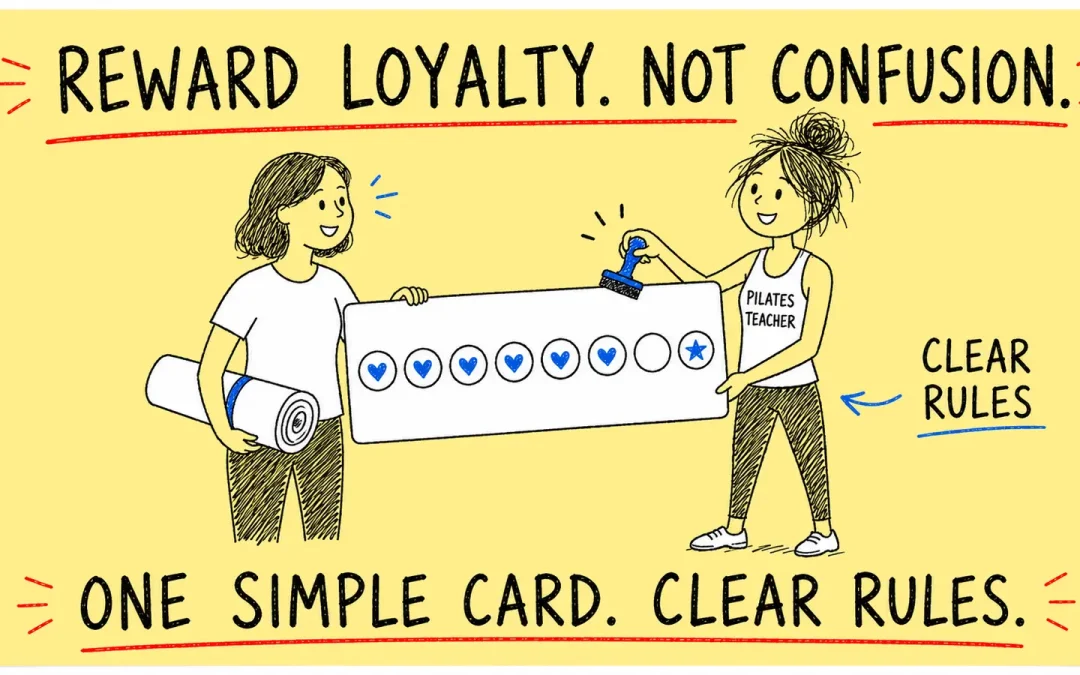
Pilates Loyalty Cards
How To Reward Attendance Without Accidentally Inventing A Tiny Bank
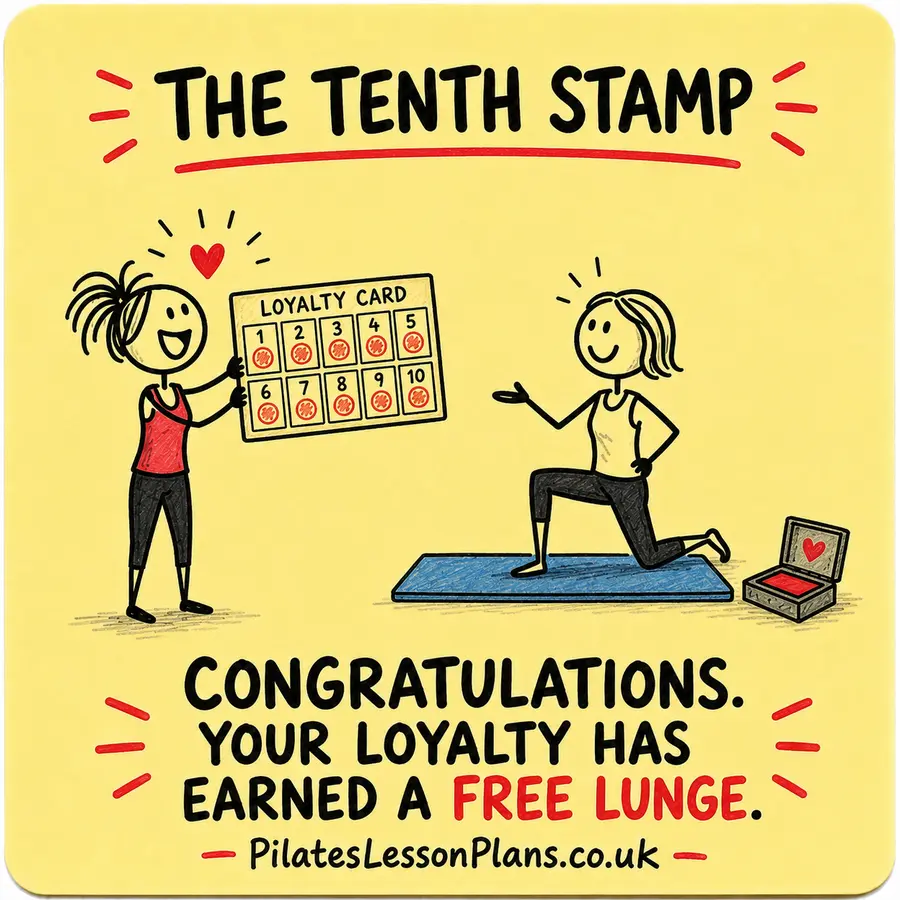
FROM GEORGE’S PILATES MARKETING DIARY
A loyalty card is a reminder, not a relationship.
The relationship still comes from good teaching, clear communication and a class people want to return to. The card merely gives the returning a cheerful little box.
A Pilates loyalty card borrows the familiar coffee-shop idea. Attend a stated number of eligible classes, collect stamps or credits and receive a clearly described reward.
It can encourage consistency and create a friendly conversation at the end of class. It cannot guarantee loyalty, fill an unsuitable class or turn a confusing pricing system into a spiritual experience.
Pilates Loyalty Cards At A Glance
- Choose one purpose: reward attendance, referrals or another specific behaviour.
- Cost the reward: make sure generosity does not eat the class.
- Write simple rules: eligible classes, expiry, lost cards and reward conditions.
- Use a practical format: paper cards are often enough.
- Test and measure: compare attendance and retention before expanding it.
First Decide What The Card Is For
“Build loyalty” sounds sensible but is difficult to measure. Choose a more specific purpose:
- encourage attendance across a beginner course;
- reward ten eligible drop-in visits;
- give existing students a reason to try another suitable class;
- support a short seasonal attendance challenge; or
- thank a student for a qualifying referral.
If the goal is reliable advance payment, a course or membership may be clearer than a stamp card. Do not make the loyalty card solve every business problem simply because it is small enough to fit in a purse.
Choose A Reward You Can Afford
A free class after ten paid visits is easy to understand, but it is not free to the business. Consider the real cost, class capacity and whether the reward may displace a paid space.
Possible rewards include:
- one free eligible class;
- a modest discount on the next course;
- priority access to a taster or workshop;
- a useful printed home-practice resource; or
- a small partner benefit that has been properly agreed.
A reward should feel worthwhile without requiring you to quietly resent the eleventh visit.
Write The Rules Before Printing
Keep the front of the card simple and put the important conditions on the back or a clearly linked page. State:
- Which classes qualify. Explain whether courses, private sessions, workshops or discounted visits are included.
- What earns a stamp. Usually attendance, not merely making a booking.
- What the reward is. Avoid “special treat” unless the surprise is part of the offer and nobody needs to compare its value.
- When the card expires. Use a reasonable, visible date.
- Whether cards can be combined or transferred. Decide before two half-complete cards arrive holding hands.
- What happens if a card is lost. A simple attendance record can prevent arguments about the legendary missing ninth stamp.
The UK government’s fair contract guidance explains why consumer terms should be transparent and balanced. The ASA promotional terms guidance covers significant conditions in advertised promotions.
Paper Card Or Digital Record?
A paper card is inexpensive, visible and familiar. It also gets washed, lost and occasionally presented with an archaeological account of the stamps it once contained.
A digital record may suit an existing booking system, but only use it if it genuinely reduces work. Avoid buying elaborate loyalty software before you have proved that the offer helps attendance.
Whichever method you choose, keep the student’s personal information to the minimum needed. A loyalty card does not require a date of birth, medical history and the name of their first pet.
A Simple Loyalty Card Layout
Front:
- business or teacher name;
- student name, if needed;
- ten clear stamp boxes; and
- the reward in one sentence.
Back:
- eligible classes;
- expiry date or validity period;
- important exclusions;
- website or booking link; and
- where to read the full terms.
Use readable type. The conditions should not require a magnifying glass normally reserved for examining a reformer spring.
Optional Local Partner Rewards
A local café, sports shop or complementary business might offer a small benefit to your students. Agree the exact offer, dates, exclusions, proof required and who answers questions. Never announce a discount before the partner has approved the wording.
A partner benefit works best when the audiences genuinely overlap. Read the local Pilates partnership guide before assembling a list of businesses simply because they exist within cycling distance.
Announce The Card Clearly
A short class announcement is enough:
“Each eligible class earns one stamp. After ten stamps, you can book one free eligible class. The card expires on [date], and the full terms are on the back.”
Then answer questions in ordinary language. If the explanation takes longer than the warm-up, the scheme may have become too clever.
Run A Small Test
Try the card with one class or course for a defined period. Record:
- how many cards were issued;
- how many students used them;
- how many rewards were claimed;
- the reward cost;
- whether attendance changed; and
- whether students understood the rules.
Free 30-Day Pilates Marketing Test Tracker
Use the same tracker to test a loyalty card, referral offer or another local marketing tactic.
Keep Marketing Consent Separate
Do not treat participation in a loyalty scheme as automatic permission for unrelated email marketing. If you invite students to join a mailing list, explain what they will receive and provide an easy opt-out. The ICO electronic marketing guidance is the current UK starting point.
George’s Conclusion

A loyalty card can be a pleasant nudge toward consistency. Keep the reward affordable, the rules readable and the administration smaller than the card.
Good teaching still does the heavy lifting. The tenth stamp simply gives it a tiny celebration.
For attracting new students before rewarding returning ones, read the marketing guide for new Pilates teachers and these eight practical marketing tactics. The Pilates Teacher Marketing Kit contains more ready-to-use ideas.


George Watts
Latest posts by George Watts (see all)
- Pilates Referrals and Reviews: How to Ask Without Feeling Awkward - August 30, 2026
- Google Business Profile for Pilates Teachers: Free Local SEO Checklist - August 30, 2026
- Pilates Class Pricing Calculator: How Much Should You Charge? - August 30, 2026